
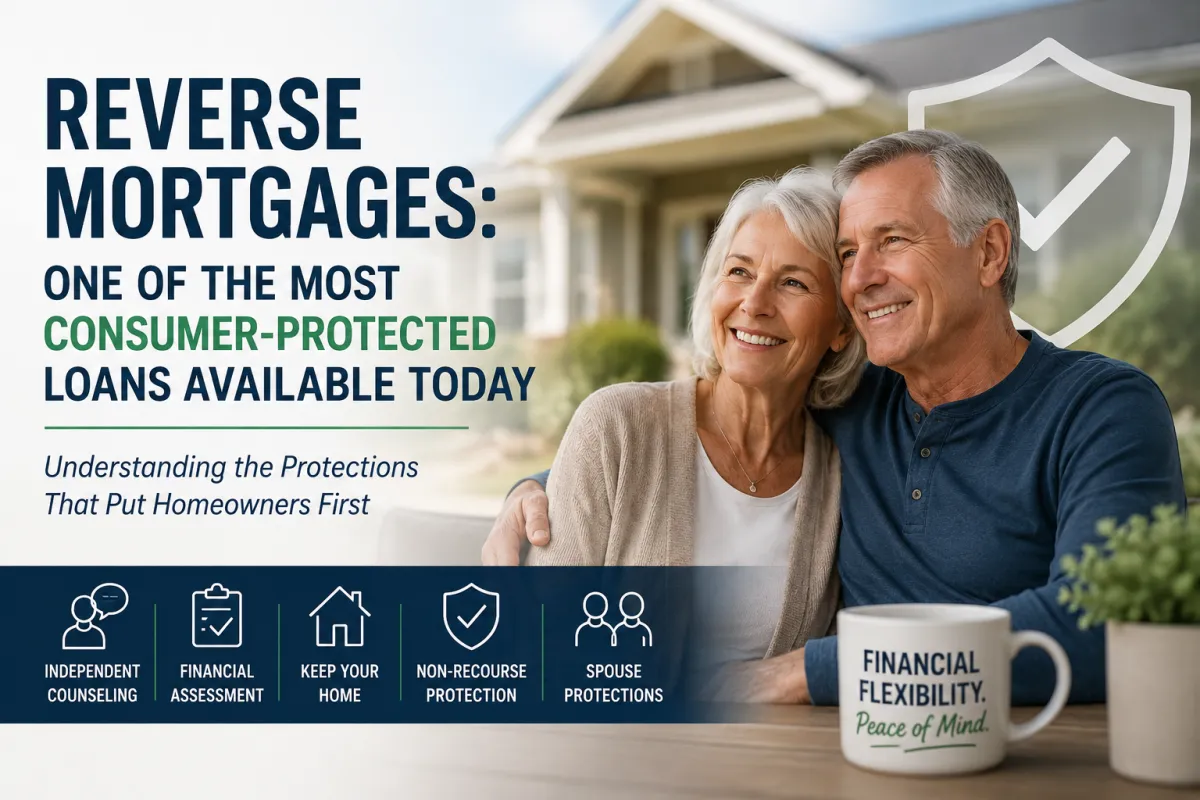
Reverse Mortgages: One of the Most Consumer-Protected Loans Available Today
When many people hear the words reverse mortgage, they immediately think of the horror stories they've heard over the years. While some of those stories stem from older versions of the program, today's federally insured Home Equity Conversion Mortgage (HECM) has undergone significant reforms that have made it one of the most heavily regulated mortgage products in America.
Reverse mortgage educator Dan Hultquist recently highlighted the numerous consumer protections built into today's HECM program, reminding us that these safeguards exist for one reason: to help older homeowners make informed financial decisions while protecting both them and their families.
Consumer Protection Starts Before the Loan
Unlike a traditional mortgage, borrowers cannot simply apply and close on a reverse mortgage.
Before moving forward, every borrower must complete counseling with an independent HUD-approved counselor. This session is designed to ensure homeowners understand:
How the loan works
Their responsibilities as homeowners
Available alternatives
Whether the reverse mortgage fits their specific financial situation
This independent counseling requirement helps ensure that no one enters into a reverse mortgage without first receiving objective education.
Financial Assessment Helps Prevent Future Problems
Another major safeguard is the Financial Assessment.
Rather than approving every applicant automatically, lenders review income, assets, credit history, and the borrower's ability to continue paying property taxes, homeowners insurance, and home maintenance.
If necessary, funds can even be set aside specifically to pay future property charges, greatly reducing the likelihood of loan default. These changes have significantly improved borrower outcomes compared with earlier versions of the program.
Homeowners Keep Ownership
One of the biggest misconceptions about reverse mortgages is that the bank takes ownership of the home.
That simply isn't true.
The homeowner remains on title and continues to own the property. As long as they live in the home as their primary residence, maintain the property, and keep taxes and insurance current, they can remain in the home for as long as they choose.
The Non-Recourse Guarantee Protects Families
Perhaps the most important consumer protection is the non-recourse feature.
This FHA guarantee means that when the loan eventually becomes due, neither the borrower nor their heirs will ever owe more than the home's value at the time it is sold.
If the loan balance exceeds the home's value, FHA mortgage insurance covers the difference—not the family.
This protection provides peace of mind for both borrowers and their heirs.
Protections for Non-Borrowing Spouses
Modern HECM guidelines also include important protections for eligible non-borrowing spouses.
Under qualifying circumstances, an eligible spouse who was not listed as a borrower may still be able to remain in the home after the borrowing spouse passes away or permanently leaves the property, provided program requirements continue to be met. These protections were added through HUD reforms over the past decade.
Reverse Mortgages Have Changed
Many of the negative stories people still hear today involve reverse mortgages originated years ago, before major HUD reforms strengthened borrower protections.
Today's HECM program includes mandatory counseling, financial assessments, protections for eligible non-borrowing spouses, refinancing safeguards, FHA insurance, and the non-recourse guarantee. These improvements have made the program substantially safer while preserving its primary purpose: helping older homeowners age in place with greater financial flexibility.
The Bottom Line
No financial product is perfect, and a reverse mortgage is not the right solution for everyone. But today's HECM is far different from the product many people remember.
The extensive consumer protections built into the program are designed to ensure that homeowners fully understand their options, remain protected throughout the life of the loan, and retain control of their retirement decisions.
If you're over age 62 and wondering whether a reverse mortgage might fit your retirement strategy, the best first step is an educational conversation with a qualified reverse mortgage specialist—not a sales pitch.
Understanding the facts can help separate today's reality from yesterday's myths.