
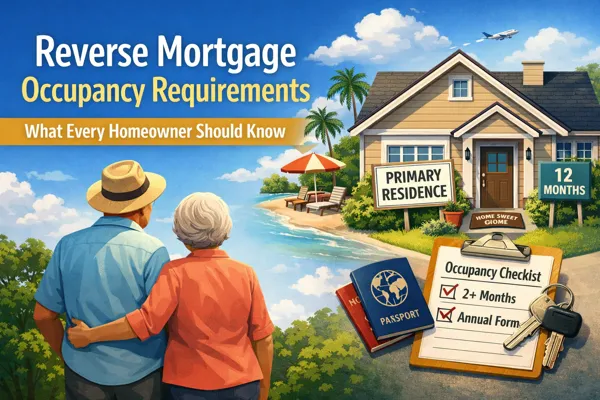
Reverse Mortgage Occupancy Rules: What Homeowners Really Need to Know
Understanding Reverse Mortgage Occupancy Requirements — What Every Homeowner Should Know
One of the most common questions we hear from homeowners considering a reverse mortgage is: “How long can I be away from my home and still keep my loan?” Unfortunately, the answers you’ll hear vary widely — and many of them are simply incorrect.
The truth is that reverse mortgage occupancy rules are more flexible — and more nuanced — than most people realize. That’s good news, but it also means it’s important to understand the facts clearly so you don’t unintentionally jeopardize your loan.
What “Occupancy” Really Means
With a reverse mortgage — especially the most common type, the FHA-insured Home Equity Conversion Mortgage (HECM) — one basic rule applies:
Your home must be your primary residence.
But what does that really mean?
Primary residence isn’t defined by an exact number of days. Instead, it’s about where you intend to maintain your permanent home and where you spend most of your time over the course of the year.
You don’t have to be physically in the house every day. Short trips, vacations, and wintering elsewhere (as long as your home remains your main residence) do not automatically violate occupancy requirements.
The “Two-Month Rule”
One of the most misunderstood aspects of occupancy is how absences are treated.
Here’s the key:
If you plan to be away from your home for more than two consecutive months, you must notify your loan servicer in writing.
The purpose of this requirement is not to penalize travel — it’s to make sure your servicer understands your home is still your principal residence.
Failing to communicate extended absences is much more likely to cause problems than the absence itself.
The 12-Month Absence Guideline
You may have heard people say you can only be away for “12 months” before your reverse mortgage must be repaid. The reality is:
The 12-month rule applies only in specific situations, such as when a borrower is absent due to a medical condition — for example, living in a nursing home or long-term care facility.
For healthy borrowers who are simply traveling or living seasonally elsewhere, this rule does not automatically apply — as long as the home remains their principal residence.
How Lenders Confirm Occupancy
Each year, reverse mortgage servicers send a short occupancy certification form.
This form asks you to confirm that the home is still your principal residence.
Promptly returning this form helps avoid misunderstandings and ensures your loan stays in good standing.
Even if you’re on the road or spending part of the year elsewhere, returning this certification keeps everything in compliance.
Tips for Staying in Compliance
To help prevent accidental violations of occupancy rules:
Notify your servicer before any absence longer than two months.
Return your annual occupancy certification promptly.
Continue paying property charges like taxes, insurance, and HOA dues on time.
Maintain your home so it remains your primary residence.
Occupancy Rules — Not Restrictions
It’s important to understand that the occupancy requirements are not designed to trap you in your home. The goal is simply to ensure that reverse mortgages are used for their intended purpose — helping older homeowners age in place and remain financially secure.
When managed correctly, reverse mortgages are flexible and supportive tools that can work with your lifestyle — whether you’re a full-time resident, a snowbird, or someone who enjoys seasonal travel.