Retirement Planning and Reverse Mortgages
Retirement Planning Doesn't Stop at Building Wealth
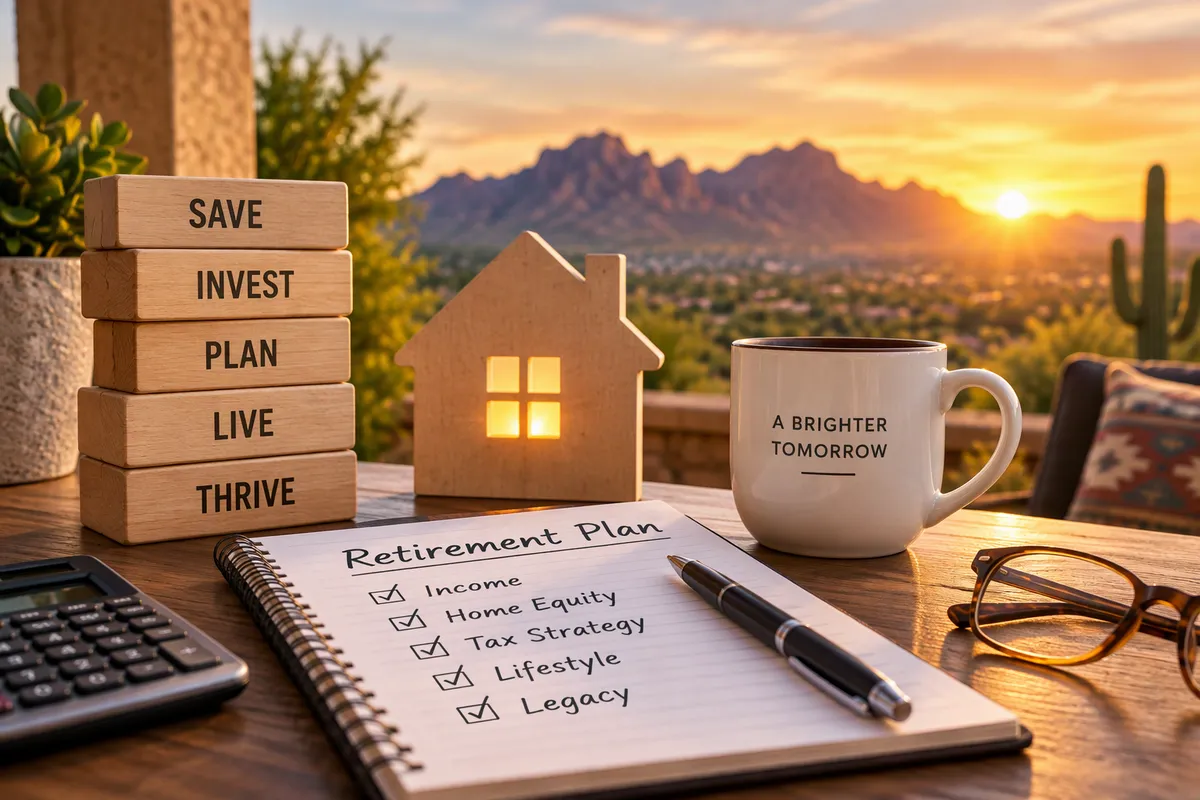
For decades, retirement planning has centered on one goal: save enough. Far less attention goes to the question that follows. Once the paychecks stop, how do you turn what you've built into income that lasts?
Dr. Barry Sacks has spent much of his career on that question. His research helped change how the financial planning world views reverse mortgages. He recently shared his story in an interview series on HECM World called Rethinking Retirement Finance.
From Putting Money In to Taking It Out
Sacks has an unusual résumé for a reverse mortgage researcher. He holds a PhD in physics from MIT and a law degree from Harvard. He spent much of his legal career working with pension plans and retirement accounts, starting around the time ERISA was introduced in 1974.
For years, his work was helping clients put money into retirement plans and earn a tax deduction. Later in his career, his focus turned to the other end of the process. In his words, he became interested in "optimizing getting the money out."
The Problem: Selling at the Wrong Time
Withdrawing from investments during a market downturn can compound the damage to a portfolio. That risk is greatest when a retiree needs those assets to support decades of future income.
Sacks considered annuities as one way to add stability to retirement income. He questioned whether retirees had to move money out of their portfolios to get that stability. He wondered if a different source of funds could let retirees avoid selling at unfavorable times, so their portfolios could recover.
That question led him to housing wealth.
Rethinking the "Last Resort"
When Sacks began this work, reverse mortgages were mostly seen as a product for homeowners in financial hardship or those who had run out of other resources. He asked whether using home equity strategically could improve the sustainability of retirement income.
Working with his brother, economist Stephen Sacks, he built mathematical models showing how reverse mortgage proceeds could be coordinated with portfolio withdrawals. Their findings appeared in the February 2012 Journal of Financial Planning paper "Reversing the Conventional Wisdom: Using Home Equity to Supplement Retirement Income."
The paper became a foundation for later work by retirement researchers, including Dr. Wade Pfau. It also shifted the conversation. The question was no longer only whether retirees should use home equity, but when and how it might help.
The central idea is simple. Different sources of retirement wealth serve different purposes, and coordinating them may produce better outcomes than relying on investments alone.
That doesn't mean reverse mortgages are right for everyone. They carry costs, including accumulating interest and a reduction in remaining home equity. Whether a strategy works depends on the borrower's circumstances and how the pieces fit together.
The Tax Angle
Sacks is a tax attorney, so he also looked at the tax side of reverse mortgages. His 2016 Journal of Taxation paper, "Recovering a Lost Deduction," examined how repaying reverse mortgage interest could potentially benefit a borrower's heirs. It looked at how estate administration arrangements and the timing of repayment could affect certain deductions.
Federal tax law has changed significantly since then, especially around the deductibility of home equity interest. Sacks says he has started preparing notes to update the research for current law.
The broader lesson is that housing wealth does more than provide income. It touches estate planning, inherited assets, retirement accounts, and tax liabilities. That makes it worth bringing mortgage professionals, financial advisors, and tax specialists together on the same conversation.
Downsize or "Right-Size"
Sacks also believes older homeowners should think carefully about their housing as they move through retirement. The home that worked for a growing family may not be the best fit for later years.
"I'm a great believer that people should think about financing either a downsize or a right size when they reach a certain age," he said.
Downsizing, relocating, or choosing a home that better suits your lifestyle can have real financial consequences, especially when significant equity is involved. A reverse mortgage used to purchase a home can also be treated differently from one used for general living expenses. Where you live, how you finance it, and how it fits with your other resources can all affect your long-term financial position.
Closing the Gap Between Research and Real Conversations
Sacks's work has helped build a growing body of research on how home equity can complement traditional retirement assets. Yet a gap remains between that research and the planning conversations happening with older homeowners.
His work leaves us with a question: are we focusing enough on how retirees use their wealth, rather than just how much they've saved?
Rethinking Retirement Finance on HECM World continues with a four-part series with Sacks, hosted by Shain Urwin of C2 Financial. It begins Thursday, November 5, and new episodes are released every Thursday.
Let's Talk
I'm Craig Gallegos, a Retirement Mortgage Specialist and Certified Senior Advisor with Fairway Independent Mortgage Corporation in Phoenix. I work with homeowners, financial advisors, and tax professionals to look at how home equity might fit into a retirement plan. If you'd like to see what it could look like for you, I'm happy to walk through it with you.
Phone 602-858-7293 Schedule an appointment
Source: Andrew Montesi, "Dr Barry Sacks: Why Retirement Planning Can't Stop at Building Wealth," HECMWorld.com, November 3, 2026.
This post is for educational purposes only and isn't financial, tax, or legal advice. Reverse mortgages have eligibility requirements, costs, and obligations, including property taxes, insurance, and maintenance. Tax rules change, so please consult your tax or legal advisor. [Insert Fairway compliance disclosures / Equal Housing language as required.]